New to collecting Pokémon cards?
The Pokémon Trading Card Game has been running since 1999, and a few thousand new cards come out every year across a handful of set releases. You do not need to play the game to enjoy it — most people collect for the art, the nostalgia, and the thrill of the pull. This page is the quick orientation: what you can buy and what it costs, what the rarities mean, how sets work, and where prices come from.
New cards drop in sets a few times a year. You buy them in packs (~$4–5) or larger sealed products — bundles, ETBs (~$50), or booster boxes (~$130–160) — all with identical pull odds. Cards range in rarity from Common up to Special Illustration and Hyper Rare. Individual cards are worth whatever the market (TCGPlayer / eBay) is paying. A masterset — every card in every variant — is what PokeTrack helps you track.
What can you buy, and what does it cost?
Everything traces back to the booster pack — 10 random cards. The other products are just different ways to buy packs, sometimes bundled with accessories. One thing worth knowing up front: pull odds are identical in every pack of a set, whether it came from a single pack, an ETB, or a booster box. You are never buying better odds, just more packs and extras.
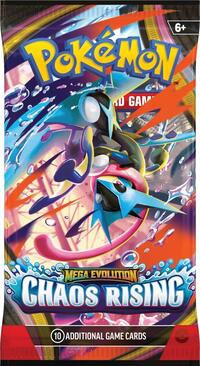
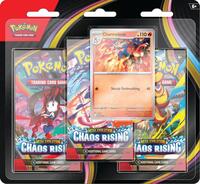
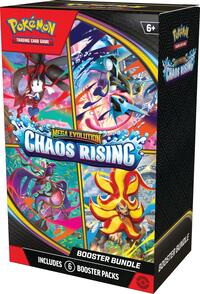
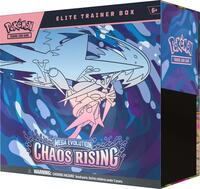
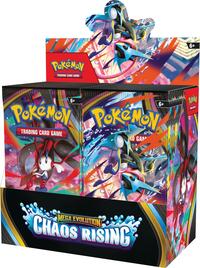
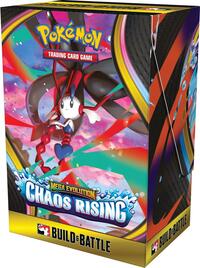
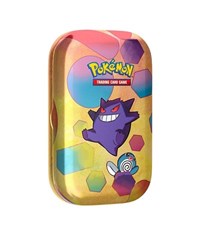

Typical US retail prices. These were last checked in early 2026 and may have changed; prices vary by set and retailer. In-demand sets (like Prismatic Evolutions) routinely sell well above these numbers.
What do the card rarities mean?
Every card has a rarity, shown by a small symbol in the bottom corner alongside the card number (e.g. 25/197). Higher rarities are pulled less often and command higher prices. Here is the modern ladder, from most common to rarest, with a real example of each:


There is also the Reverse Holofoil — any common, uncommon, or rare can show up with a shiny patterned background instead of the normal finish. That means a single card number can exist as a Normal and a Reverse Holo, which is exactly why serious collectors track variants, not just card numbers.
How do sets, secret rares, and mastersets work?
Cards are released in sets (also called expansions) — a themed batch of a few hundred cards that drops a few times a year. Each card is numbered out of the official set size, like 102/167.
You will also see cards numbered above the set size — a 191/167, for example. Those are secret rares: extra ultra-rare, illustration, and gold cards that sit beyond the official count. They are the hardest to pull and usually the most valuable.
That brings us to the masterset — owning every card in a set in every variant: each Normal, each Reverse Holo, each special rare, and every secret rare. It is the most complete way to collect a set, and it is the goal PokeTrack is built around. When you track a set with us, you are tracking the full masterset, not just one of each number.





Where do card prices come from?
Sealed products have a suggested retail price, but individual cards (“singles”) do not — they are worth whatever people are actually paying right now. Singles trade on open marketplaces like TCGPlayer and eBay, and the market price moves with supply, demand, the card’s condition, and whether it has been professionally graded.
That is the gap PokeTrack fills: it shows the live TCGplayer market value for every priced card and variant (with an eBay asking-price fallback where we don't), tracks how your collection’s value changes over time, and flags when prices dip so you know a good time to buy.
Want to see how it stacks up against other tools? Read the tracker comparison, or browse every Pokémon in the Dex.
Ready to start your collection?
Pick a set, mark the cards you own, and watch your masterset and its value come together. It is free to start with three sets and 100 cards from any other set. No credit card, no download.
START TRACKING FREE